AI Transformation
We work with your district to analyze workflows, build knowledge bases, and deploy student-safe AI agents you own and control. On ibl.ai you own all the code and the data, run it model-agnostic across any LLM, and pay with no per-seat pricing — so you can deploy anywhere, from your own cloud to a fully air-gapped network. No need to choose build vs. buy — you get both.





MCP Architecture Guide for K-12
How to connect your district systems (SIS, LMS, behavior tracking, parent communication) to AI agents — with FERPA and COPPA compliance.
Read the GuideAI Transformation - Own Your District's Intelligent Workflows
ibl.ai works directly with your district to analyze existing workflows, build structured knowledge bases, and deploy purpose-built AI agents that run on your infrastructure with your full ownership and student-safety guardrails.
No black boxes, no vendor lock-in—agents that operate like skilled hires within your district team.
What This Is
AI Transformation is a hands-on engagement where ibl.ai partners with your district to understand how work actually gets done—then builds AI agents tailored to your specific processes. We do not sell generic chatbots. We analyze your workflows, document your district knowledge, and create agents with defined roles, skills, boundaries, and age-appropriate safeguards.
Every agent, knowledge base, and integration runs on your infrastructure with COPPA/CIPA/FERPA compliance built in. You own the code, the data, and the configurations. When the engagement ends, your team operates and extends everything independently.
Knowledge Base Architecture
Your knowledge base is architected with strict read/write separation. Agents that answer questions read from curated, validated knowledge stores. Agents that update knowledge write through approval workflows with human review.
This separation prevents hallucinated content from reaching students or families.
We work with your subject-matter experts to catalog and ingest district knowledge—board policies, student handbooks, curriculum guides, special education procedures, and operational manuals.
Each knowledge source is tagged with provenance, freshness dates, and authority levels.
Knowledge bases are version-controlled like code. Every update is tracked, reversible, and auditable.
When board policies change or state regulations update, knowledge updates flow through your existing governance process before agents surface them.
Agents retrieve from multiple knowledge stores simultaneously—your SIS data, HR policies, curriculum resources in Google Classroom or Canvas, and departmental procedures—ranked by relevance and authority.
No single point of knowledge failure.
Agent Roles - AI Hires with Defined Skills
Each agent is designed like a new hire with a specific job description. It has defined responsibilities, access to specific systems, knowledge boundaries, and escalation protocols.
An enrollment agent knows enrollment workflows. A special education agent knows IEP processes. They do not bleed into each other's domains.
Agents are equipped with discrete skills—query the SIS via PowerSchool or Infinite Campus, draft a parent communication, generate an attendance report, schedule an IEP meeting, look up a board policy.
Skills are composable: agents chain them to handle multi-step workflows that previously required multiple staff and manual handoffs.
Every agent knows its limits. When a question falls outside its defined competence—especially anything involving student safety, discipline, or special education rights—it escalates to the right human.
Escalation paths are configured per role, per school, per sensitivity level.
Just like human hires, agents get reviewed. We build evaluation frameworks that measure accuracy, response quality, escalation appropriateness, age-appropriateness, and user satisfaction.
Underperforming agents get retrained or restructured.
Workflow Analysis Process
We embed with your teams to map how work actually flows—not how org charts say it should. Every handoff, approval step, data lookup, and decision point is documented.
This reveals automation opportunities that generic AI tools miss.
We identify where staff spend time on repetitive, rule-based tasks that agents can handle.
Common findings: answering the same enrollment questions, manual data entry across SIS and HR systems, routing parent requests to the right department, and generating routine compliance reports.
Each potential automation is scored on impact (time saved, error reduction), feasibility (data availability, system access), and risk (student safety, COPPA/CIPA/FERPA compliance requirements).
High-impact, low-risk workflows deploy first.
We plan deployment in phases—starting with internal-facing agents that assist district staff, then expanding to teacher-facing and family-facing agents as confidence builds.
Each phase has defined success criteria and student-safety reviews before proceeding.
Full District Ownership
What You Receive
Engagement Model
Get Started
What our partners say about us

Chris Gabriel | Google

Lorena Barba | George Washington University
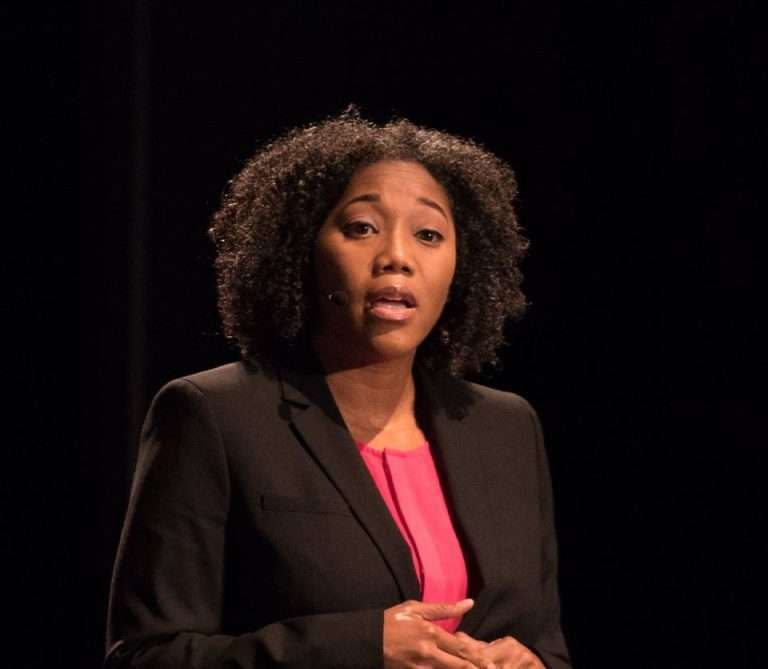
Dr. Juana Mendenhall | Morehouse College

Juile Diop | MIT

Adam Tetelman | Nvidia

Jason Dom | American Public University System

Benjamin Breyer | Columbia University

Ken Fujiuchi | SUNY

Erika Digirolamo | Monroe College

David Flaten | SUNY

David Vise | Modern States Education Alliance

Linda Wood | ARM Institute (U.S. Department of Defense)
Chris Gabriel | Google
Lorena Barba | George Washington University
Dr. Juana Mendenhall | Morehouse College
Juile Diop | MIT
Adam Tetelman | Nvidia
Jason Dom | American Public University System
Benjamin Breyer | Columbia University
Ken Fujiuchi | SUNY
Erika Digirolamo | Monroe College
David Flaten | SUNY
David Vise | Modern States Education Alliance
Linda Wood | ARM Institute (U.S. Department of Defense)
Frequently Asked Questions
AI Transformation is not a product—it is a consulting engagement. We analyze your actual workflows, build knowledge bases from your institutional content, and deploy agents designed for your specific processes.
Generic chatbots give generic answers. Our agents know your policies, your systems, and your escalation paths.
Agents that answer questions read from curated, validated knowledge stores. Agents that update knowledge write through approval workflows with human review.
This prevents hallucinated or incorrect content from contaminating your institutional knowledge base. Updates go through your governance process before agents surface them.
Each agent is designed like a new hire with a specific job description—defined responsibilities, access to specific systems, knowledge boundaries, and escalation protocols.
An admissions agent handles admissions workflows. A financial aid agent handles financial aid. They do not bleed into each other's domains.
Skills are composable: agents chain discrete capabilities to handle multi-step workflows.
A typical engagement runs 10-18 weeks: 2-3 weeks for workflow analysis, 2-4 weeks for knowledge base construction, 4-8 weeks for agent development and integration, and 2-3 weeks for deployment and training.
Phased rollout starts with staff-facing agents before expanding to student-facing use cases.
Everything. All agent code, knowledge bases, integration adapters, infrastructure configurations, monitoring dashboards, and documentation belong to your institution.
Your team receives comprehensive training to build new agents, update knowledge bases, and manage the system independently. No ongoing dependency.