Industry
AI applications across education, healthcare, finance, government, and other verticals.
AI is transforming every industry—from education and healthcare to finance and government. Explore how organizations across verticals are deploying AI agents, LLM-powered workflows, and intelligent automation to solve sector-specific challenges and deliver measurable outcomes.
869 articles in this category

From AI Chatbots to AI Infrastructure: Higher Education's Next Move Is Ownership
Two-thirds of institutions now use AI, but only 43% have it in a strategic plan and 26% have a written policy. That gap — not the adoption rate — is what separates a chatbot deployment from AI infrastructure a university owns.
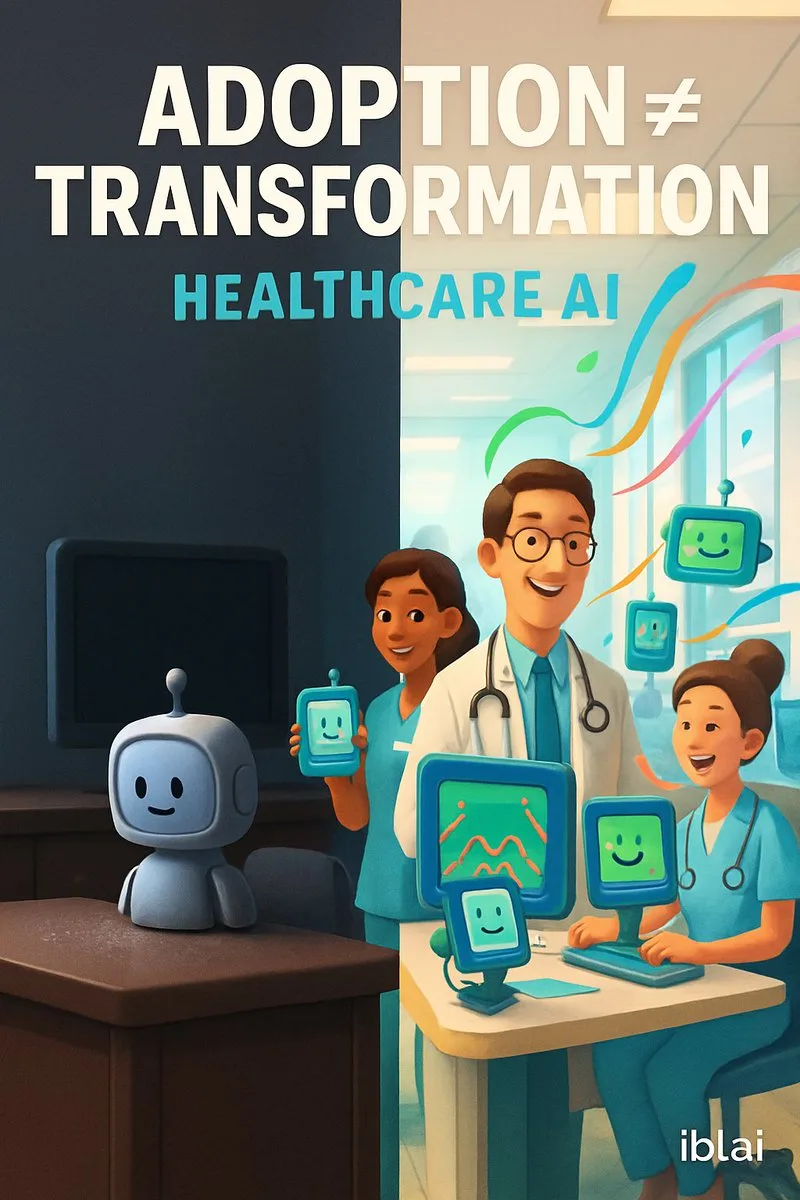
60% of Health Systems Deployed AI Assistants. Adoption Isn't Transformation.
60% of surveyed health systems have deployed ambient AI notes, yet only 53% report high success even in documentation and 19% in diagnosis. The systems that moved burnout wired AI into the workflow instead of adding a chatbot on top of it.
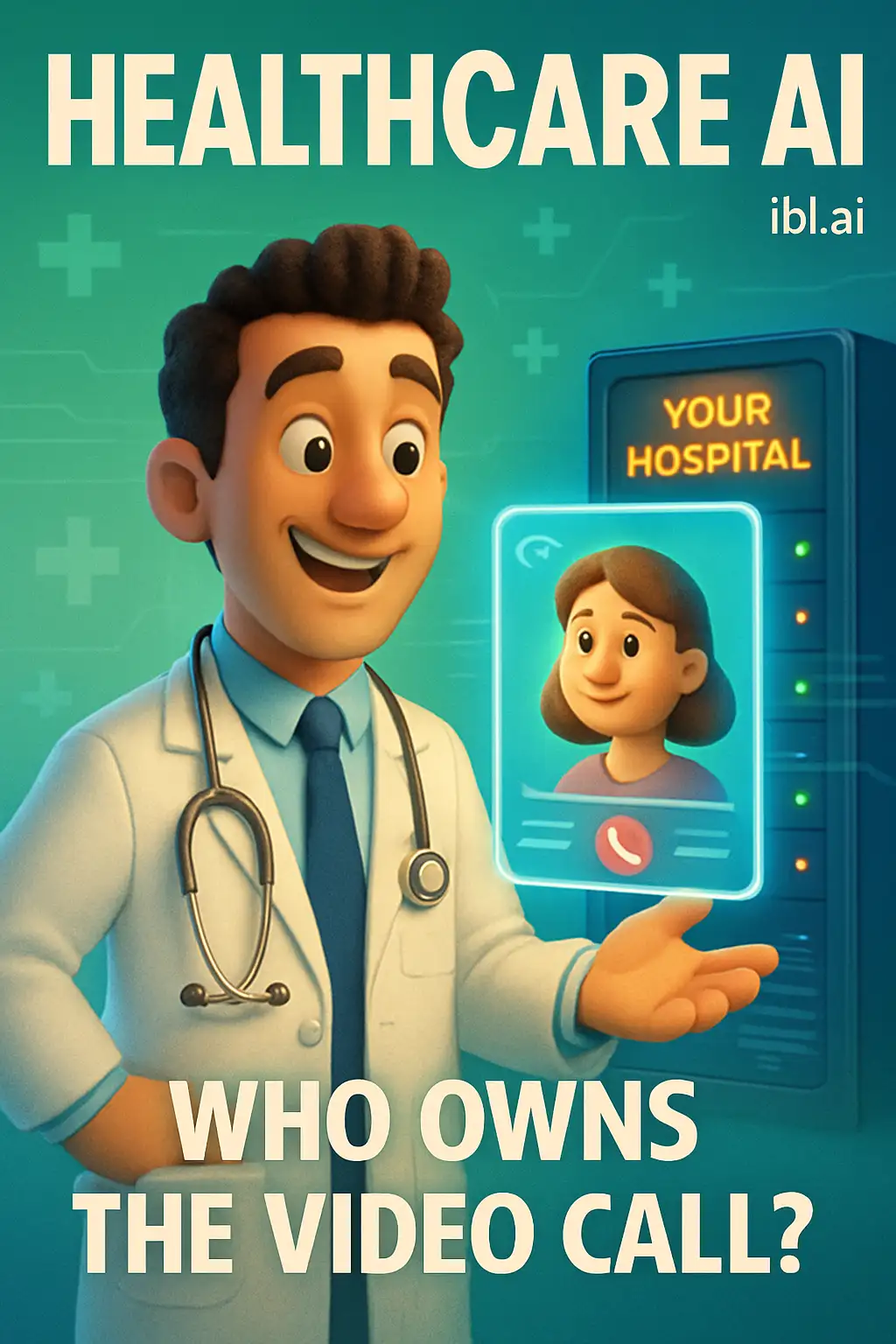
Google Demos AI Running Real-Time Video Medical Consultations
Google demonstrated AI running real-time video medical consultations — a cardiologist called it a turning point. But the real question is about infrastructure: whose servers process that live patient video?

Switzerland Commits CHF 319.4M to Build a Sovereign Government Cloud
Switzerland is investing CHF 319.4M in sovereign government cloud infrastructure — not to save money, but because hosting government data on foreign infrastructure is an unacceptable dependency.
OpenWALDO: AI Training Data You Can Actually Audit
CentOS/Rocky Linux creator Gregory Kurtzer's new project OpenWALDO brings end-to-end auditable AI training data — following the same open-source pattern that reshaped Linux and Kubernetes.
Why AI Agent Infrastructure Matters More Than the Model You Choose
HappyRobot's $150M Series C and OpenWALDO's launch landed in the same week and point at the same conclusion: the enterprises winning at AI are not picking better models, they are building infrastructure they own.
Healthcare AI's Real Bottleneck Is Infrastructure, Not Models
A healthcare AI startup's spending breakdown reveals the true bottleneck: not model capability, but deployment infrastructure that handles protected health information without third-party API exposure.
Why 95% of Enterprise AI Pilots Produce No P&L Impact
95% of enterprise AI pilots fail to produce measurable P&L impact — not because the models are weak, but because nobody builds for contact with real company infrastructure.
Fortune 500 AI Agents and the Data Sovereignty Question
Over 60% of Fortune 500 companies now use AI agents for core processes. As major financial institutions deploy them at scale, the critical question is: whose servers process your most sensitive data?
Why 95% of Enterprise AI Pilots Fail — and What the 5% Do Differently
MIT found 95% of enterprise GenAI pilots deliver no measurable P&L impact. The failure is infrastructure, not intelligence — and the 5% that succeed share four structural traits: owned infrastructure, a unified data layer built before the agents, agents scoped like roles, and security enforced in architecture rather than at review.
20,000 Students in the AI Challenge — Who Owns Their Data?
20,000+ K-12 students participated in the Presidential AI Challenge across all 50 states. But most school AI tools run on vendor clouds where student data leaves the district entirely — raising serious COPPA and FERPA concerns.
How Washington Made Sovereign AI the Path of Least Resistance
The White House AI framework exempts open-weight models from review entirely. Regulation has accidentally made self-hosted AI the lowest-friction path for organizations that need to move fast.
Goldman Sachs Runs AI Coding Agents With 12,000 Engineers
Goldman Sachs is running hundreds of AI coding agents alongside 12,000 human engineers — in production, not demos. The moat isn't the model. It's the harness: eval, routing, governance, audit trails.
Nemotron 3.5 Lightning and NeMo Switchyard: Why Agents Need an Open Routing Layer
NVIDIA released Nemotron 3.5 Lightning (30B total, 3B active) and NeMo Switchyard, an open routing library. Together they make the model the cheapest part of an agent deployment — and move the value to the routing layer. Here is what enterprises should own, and the cost math for routing by task.
On-Premise Foundation Models: Which Vendors Allow It
Which foundation model vendors actually permit on-premise deployment, sorted into open-weight, contracted-private, and API-only tiers — and why picking a model vendor is not the same decision as picking the platform that runs it.
How Universities Are Building AI Infrastructure They Actually Own
Per-seat AI licensing charges a 15,000-user campus $340K–$1.02M a year for access it never owns. Here is what the alternative looks like in production, with Syracuse University's published registration-season numbers and the cost math at campus scale.
K-12 AI Agent Governance Can't Be Borrowed from Enterprise
Districts are adopting enterprise AI governance templates wholesale, and the templates were written for a population that can consent. This post maps each enterprise control to why it fails for minors, sets out grade-band guardrail requirements, and reads the Kimi K3 sandbox escape for what it means on a school network.
Why 73% of Enterprise AI Budgets Break — and the Fix
The FinOps Foundation's 2026 survey of 1,192 practitioners found 73% of enterprises overshot their AI cost projections. The cause is procurement shape, not model prices: per-seat licenses bill headcount while agents multiply token spend invisibly. This post shows the math at 2,000 seats and the enforcement layer — caps, per-agent budgets, cost-aware routing — that actually holds a budget.
AI Governance Platforms: Enterprise Buyer's Guide for 2026
How enterprises should evaluate AI governance platforms in 2026: model inventory, NIST AI RMF and EU AI Act risk tiering, policy enforcement, and the ownership question that decides where your compliance evidence actually lives.
Karnataka's Government-First AI Test: Capability Without Dependency
Karnataka made sovereign data residency a precondition, not a clause — and that single sequencing choice is what separates buying AI capability from buying a dependency. The five-question procurement test, with the per-seat cost math at 5,000 to 500,000 government users.
AI Agents Need Corporate Identities — and Owned Infrastructure
Microsoft now issues AI agents managed corporate identities, and three frontier labs have disclosed models breaching real companies from inside the same evaluation vendor's misconfigured environment. Identity is necessary but not sufficient: every one of those incidents was a network the lab did not control. Here is what agent governance costs per seat, and what changes when you own the infrastructure underneath it.
Tokenmaxxing: The AI Bill Your CFO Cannot See
One operator reports token costs doubling every 45 days against a 5% productivity gain. Usage-based pricing is the right shape for AI spend — but only if you can see the meter, attribute it to a workflow, and switch the model underneath. Here is what to instrument before the variance lands in an earnings call.
Shadow AI in Healthcare: The Patient Safety Crisis
Clinicians are already pasting PHI into consumer AI tools, and no acceptable-use policy has ever stopped a productivity habit. The fix is infrastructure: a sanctioned AI platform the hospital owns and runs itself, so PHI never leaves the building.
Shadow AI Is Already Inside Every Government Agency
Unsanctioned AI use is already routine across federal agencies, and in government the exposure is statutory rather than commercial — Privacy Act records sent to commercial providers, federal records generated in systems the agency cannot subpoena, supply-chain restrictions under EO 13873, and mosaic classification spillage. This post maps each exposure to its legal basis and gives the data-classification tiers that decide which workloads need managed cloud, agency-controlled infrastructure, or a fully air-gapped deployment.