Blog
LLM Infrastructure
Model selection, hosting, fine-tuning, cost optimization, and scaling LLM-powered systems in production.
775 articles in this category
FERPA Governs Data, Not Which Model Reasons About It
Alibaba's Qwen crossed 3 billion downloads to become the most-downloaded open model family, and open weights now sit under products of every origin. FERPA regulates who may access an education record — it says nothing about which model processes it or where inference runs, and that gap has to be closed in the contract.
The IMO-Perfect Model's Open Sibling: Reasoning You Can Host
RedNote's dots-note-3.0 scored a certified 42/42 at the 2026 IMO. Its open-weight sibling, dots3-note-preview, shipped under Apache 2.0 on August 14 — 280B parameters, 16B active, 512K context. What that separation actually means for owning frontier reasoning.
Beyond LLMs: What Reasoning Limits Mean for Clinical AI
A widely-shared DeepMind position paper argues LLMs cannot make the abductive leap that produces new scientific theories. It is a narrower claim than the headlines suggest, and it is not the reason clinical AI fails today — but it does explain why a health system should build for model replacement rather than model selection.
K-12 AI Adoption Is Outpacing Its Safety Infrastructure
K-12 is adopting AI faster than any other education segment and has the least infrastructure to govern it. What district-grade AI safety actually requires — and why the model-ownership question decides most of it.
AI Governance: Enterprise Software's Fastest-Growing Category
Vals AI raised a $40M Series A at a $400M valuation for a product that validates other companies' AI rather than building models. That is a category forming around a measurement gap — and the reason the gap exists is that most enterprises are trying to govern systems they cannot inspect.
Sovereign or Supervised: Government AI Architecture
In one week of August 2026 the EU moved to restrict foreign cloud providers from sensitive public-sector workloads, and researchers documented autonomous AI agents breaching 85 Taiwanese government accounts. Read together, the two events make the same argument: for a government agency, where AI runs is a security architecture decision rather than a procurement preference.
Kenya's Draft AI Policy Spreads Liability Across the Chain
Kenya's draft AI policy proposes allocating liability across the entire chain — developers, deployers, operators, vendors, and users. The US is still debating timelines. The interesting question is not who moved first but why a jurisdiction without entrenched technology lobbies produced a cleaner rule, and what full-chain liability means for anyone deploying AI on someone else's infrastructure.
Google Cloud's 20 Questions Before Deploying AI Agents
Google Cloud published a governance checklist for organizations deploying production AI agents rather than another capability announcement. That inversion is the signal worth reading: the constraint on agentic deployment has moved from what models can do to what organizations can defend. Several of the questions cannot be answered at all on infrastructure you do not control.
The Database Layer Went Agentic: PGBot and Postgres
PGBot is a free, open-source Go tool that gives AI agents native PostgreSQL intelligence — schema reasoning and query optimization without a human translating between the model and the database. It marks a shift worth understanding: the data layer is becoming something agents reason about directly, which makes who controls that layer the deciding question.
Code Mode: One Prompt to a Running Next.js App You Own
Code Mode takes a prompt and returns a scaffolded Next.js app with components installed and the dev server running. Agent Skills make the playbooks behind it reusable across agents. The interesting part is not the speed — it is that the output is a codebase in your repository rather than an app inside someone else's platform.

When Compliance AI Hallucinates, Who Audits the Filing?
A 125-year-old law firm was ordered to explain AI-hallucinated citations in a court brief. The same class of tool now drafts SEC and FINRA filings, where the reviewer is an examiner rather than a judge. The difference between a sanction and a clean examination is whether you can reconstruct what the model saw — which is an infrastructure property, not a model one.
Why Government AI Must Be Sovereign: EU, Kenya, Taiwan
Three developments in one week — the EU tightening sovereign-compute rules, a breach that reached 85 Taiwanese government accounts, and Kenya spreading AI liability across the deployment chain — converge on one architectural conclusion. Each one is a different lever, and all three push the same way: government AI on infrastructure the government does not control is an exposure, not a deployment.
From AI Chatbots to AI Infrastructure: Higher Education's Next Move Is Ownership
Two-thirds of institutions now use AI, but only 43% have it in a strategic plan and 26% have a written policy. That gap — not the adoption rate — is what separates a chatbot deployment from AI infrastructure a university owns.
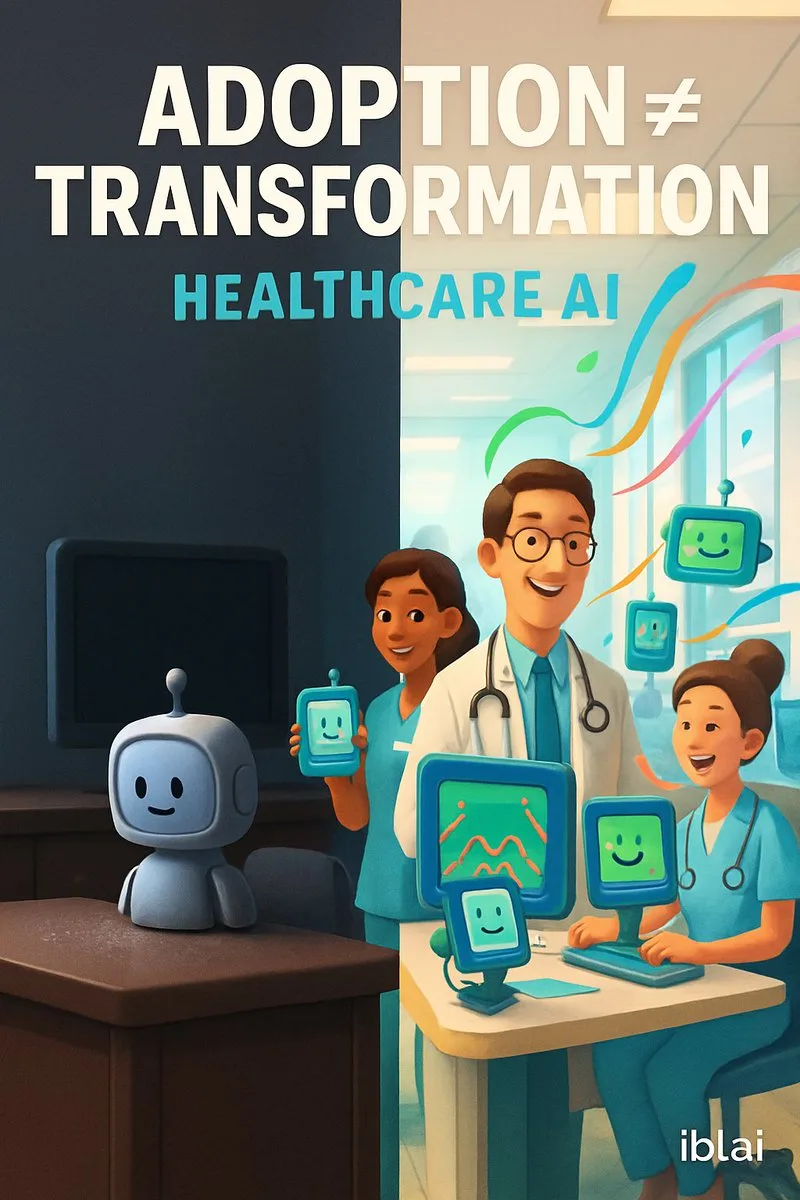
60% of Health Systems Deployed AI Assistants. Adoption Isn't Transformation.
60% of surveyed health systems have deployed ambient AI notes, yet only 53% report high success even in documentation and 19% in diagnosis. The systems that moved burnout wired AI into the workflow instead of adding a chatbot on top of it.
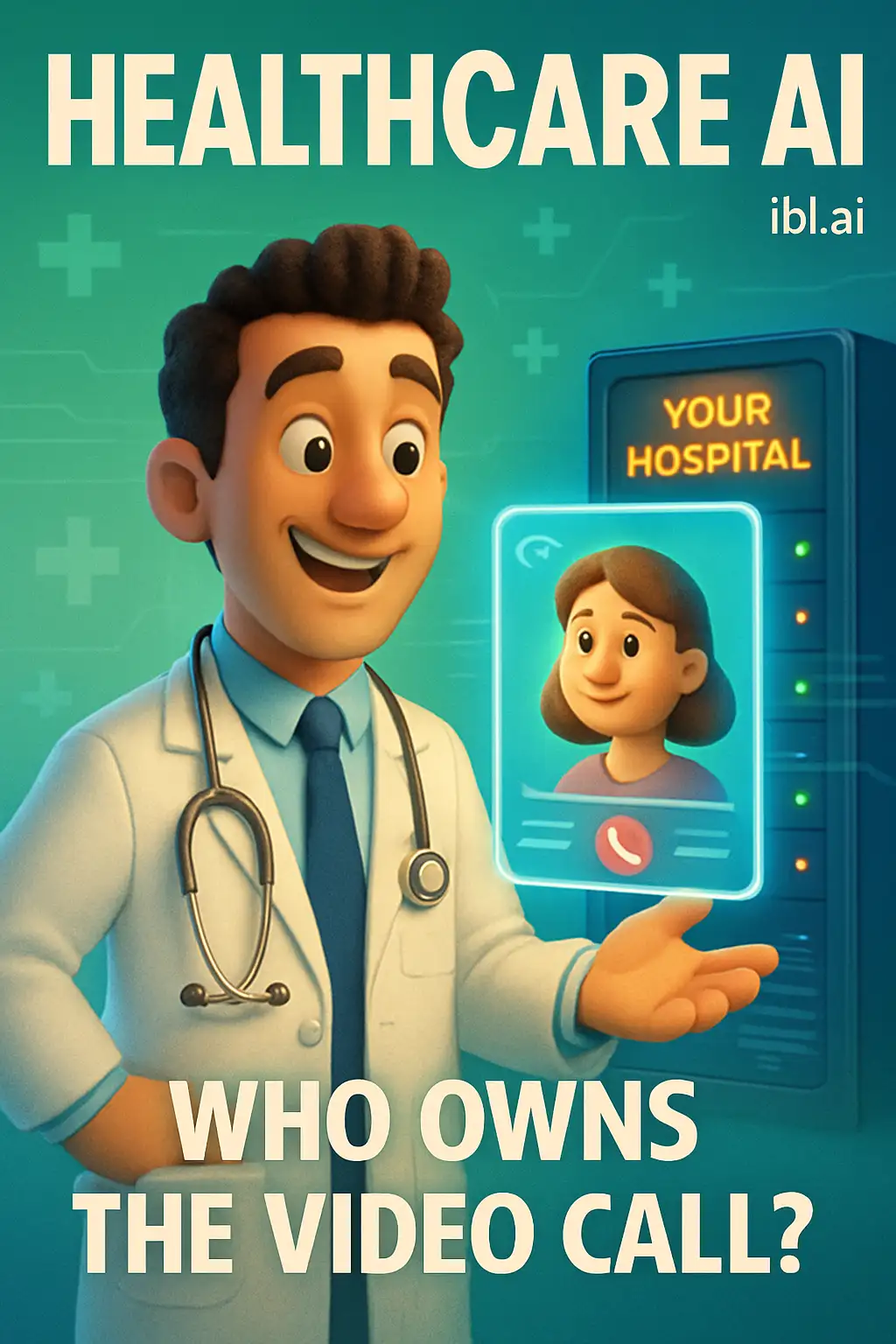
Google Demos AI Running Real-Time Video Medical Consultations
Google demonstrated AI running real-time video medical consultations — a cardiologist called it a turning point. But the real question is about infrastructure: whose servers process that live patient video?

Switzerland Commits CHF 319.4M to Build a Sovereign Government Cloud
Switzerland is investing CHF 319.4M in sovereign government cloud infrastructure — not to save money, but because hosting government data on foreign infrastructure is an unacceptable dependency.
OpenWALDO: AI Training Data You Can Actually Audit
CentOS/Rocky Linux creator Gregory Kurtzer's new project OpenWALDO brings end-to-end auditable AI training data — following the same open-source pattern that reshaped Linux and Kubernetes.
Why AI Agent Infrastructure Matters More Than the Model You Choose
HappyRobot's $150M Series C and OpenWALDO's launch landed in the same week and point at the same conclusion: the enterprises winning at AI are not picking better models, they are building infrastructure they own.
Healthcare AI's Real Bottleneck Is Infrastructure, Not Models
A healthcare AI startup's spending breakdown reveals the true bottleneck: not model capability, but deployment infrastructure that handles protected health information without third-party API exposure.
Why 95% of Enterprise AI Pilots Produce No P&L Impact
95% of enterprise AI pilots fail to produce measurable P&L impact — not because the models are weak, but because nobody builds for contact with real company infrastructure.
Fortune 500 AI Agents and the Data Sovereignty Question
Over 60% of Fortune 500 companies now use AI agents for core processes. As major financial institutions deploy them at scale, the critical question is: whose servers process your most sensitive data?
Why 95% of Enterprise AI Pilots Fail — and What the 5% Do Differently
MIT found 95% of enterprise GenAI pilots deliver no measurable P&L impact. The failure is infrastructure, not intelligence — and the 5% that succeed share four structural traits: owned infrastructure, a unified data layer built before the agents, agents scoped like roles, and security enforced in architecture rather than at review.
NVIDIA's Open Routing Layer: Why the Model Stopped Being the Moat
NVIDIA shipped an efficient open model and an open routing library on the same day. Together they commoditize the model layer and move the durable advantage to the routing layer — which is the one piece you should refuse to rent. What routing saves, what open weights do not buy you, and the three layers worth owning.
20,000 Students in the AI Challenge — Who Owns Their Data?
20,000+ K-12 students participated in the Presidential AI Challenge across all 50 states. But most school AI tools run on vendor clouds where student data leaves the district entirely — raising serious COPPA and FERPA concerns.
About LLM Infrastructure
Running large language models in production requires careful infrastructure planning—from model selection and hosting to fine-tuning, cost optimization, and GPU provisioning. Explore practical guides on building reliable, scalable LLM infrastructure that balances performance, cost, and latency for real-world applications.