Blog
Agentic AI Blog
Field notes on agent architectures, LLM infrastructure, and what it costs to run AI you actually own — from the team deploying it for 1.6M+ users across 400+ organizations.
121–144 of 1023
GLM-5.3-Flash: Why a 4.44x Smaller KV Cache Changes Self-Hosting
Zhipu confirmed the anonymous 'Ox Alpha' model was GLM-5.3-Flash and released the weights: 320B total, 18B active, tying Claude Opus 4.8 on the Artificial Analysis index. The headline is the benchmark, but the number that matters for anyone self-hosting is the 4.44x KV-cache reduction — because KV cache, not parameter count, is what caps concurrent users per GPU.
Healthcare AI Should Start in the Billing Office, Not the Exam Room
Roughly 65% of denied healthcare claims are never appealed, while 54% of the ones that are get overturned. That gap is the highest-ROI AI deployment in healthcare, and it sits in the revenue cycle rather than at the point of care — but only if the PHI architecture survives a security review.
What the UK-Ukraine AI Declaration Actually Says About Sovereignty
The UK and Ukraine signed an AI partnership on 24 August 2026. It is a non-binding declaration about sharing battlefield data, not a sovereignty mandate — and reading it accurately matters more for government AI buyers than the headline does. What the document commits to, what it does not, and what India's DRONA 2.0 shows about sovereignty that is already operational.
Self-Hosted LLM Providers: Ollama vs vLLM vs TGI vs LocalAI
A practical guide to the self-hosted LLM serving stack — Ollama, vLLM, llama.cpp, Hugging Face TGI, LocalAI, and Open WebUI — what each one is actually for, the hardware each needs, and what you still do not own once the runtime is running.
Alibaba's ANOLISA Moves Agent Infrastructure Into the Operating System
Alibaba Cloud open-sourced ANOLISA, an agent-first Linux distribution that treats context compression, sandboxing and agent observability as operating-system services rather than application features. Here is what it actually ships, what the OS layer can and cannot own, and why the pattern favors organizations that own their stack.
The Agent-First Campus: Why Universities Are Buying an AI Operating System, Not Chatbots
Universities that moved past chatbots are not deploying a better chatbot — they are deploying a network of purpose-built agents wired into the SIS, LMS and CRM. The decision that determines whether it lasts is not which agents you build but whether you own the platform underneath them.
Longer Reasoning Can Make Models Worse — What That Means for Legal AI Routing
A multi-institution study found that extending a reasoning model's thinking time can reduce accuracy, with five distinct failure modes. For legal teams the consequence is concrete: brief drafting and contract extraction need different models, and paying for maximum reasoning on both is worse than routing.
Most Healthcare AI Pilots Never Reach Production — It Is an Architecture Problem
Roughly four in five healthcare AI pilots never reach production, and the cause is rarely the model. What separates the survivors is architecture: structured outputs, deterministic fallbacks, domain-specific evaluation and audit-complete observability — none of which a demo needs and all of which production requires.
OpenViking's Real Number Isn't 91%. It's AGPL-3.0.
ByteDance's OpenViking cuts agent token use by 34–91% and is at 32,900 GitHub stars. It is also AGPL-3.0, which is the fact enterprise architects need first — and the one every summary of the release leaves out.
Agent Skill Catalogs Are a Supply Chain. Who Signs Yours?
Enterprise teams have stopped asking how to deploy an agent and started asking who is allowed to publish a skill. NVIDIA's verified skill pipeline treats agent capabilities as signed software artifacts — which makes the catalog a supply chain, and raises the question of who holds the signing key.
Sovereign AI Is Now Procurement Policy, Not Rhetoric
France's Ministry of the Armed Forces signed a framework agreement with Mistral in January 2026, and Nigeria's National Digital Cloud Policy scopes sovereignty to government and regulated data. Sovereign AI has moved from speeches into contracts — and the contract terms are where it succeeds or fails.
DRONA 2.0: A Military College Replaced Its Custom GPT
India's Defence Services Staff College launched DRONA 2.0 on 18 August 2026, moving from a customised GPT to Sarvam-105B on a GPU server inside its own secure network. The 14-month migration is the clearest public template yet for how an institution goes sovereign on AI.
Healthcare AI Fails at the Information Layer, Not the Model
HIPAA's minimum necessary standard is a retrieval requirement, not a policy one. Most clinical AI enforces it at display time, which is too late — and it is why healthcare AI stalls at the information layer.
Decade-Long Compute Bets Face Two Opposite Curves
Frontier training costs are rising while the cost of a fixed capability has fallen roughly 1,000x in three years. Any decade-long AI infrastructure bet has to survive both curves, and they point in opposite directions.
The Multilingual Gap Is the Healthcare AI Access Barrier
IISc's SPIRE Lab released SraVaani under MIT — speech recognition for 65 Indian languages, 40+ of which no commercial system officially supports. Language coverage is an infrastructure choice, not a feature request.
Universities Pay Per Seat for a Runtime That's Now Free
The agent runtime went free this month from both DeepSeek and Microsoft. Universities still paying per student for AI assistants should ask what the per-seat fee is now buying.
The Agent Runtime Just Commoditized. Now What?
DeepSeek Harness has passed 191,000 GitHub stars under MIT, Microsoft's Agent Harness reached GA, TrueForge is MIT, and Block open-sourced its Berd agent workspace under Apache 2.0. The agent loop is free — so value moves to what you build on it, where you run it, and who governs what plugs into it.
An RFP Checklist for AI Platform Procurement
Twelve questions that separate AI platform vendors from services firms, plus the evaluation criteria to weight. Criteria that reward staffing depth get staffing-heavy proposals.
Bounded vs Open-Ended AI Engagements: The Difference
An engagement is bounded when the thing being integrated is finished. Everything else — ceilings, change control, weekly reporting — is compensation for a boundary that was never there.
The $7.2M Abandoned AI Initiative: What Goes Wrong
The average abandoned enterprise AI initiative has $7.2M sunk into it, and 88% of pilots never reach production at all. The failure is rarely the model — it's the eighteen months spent building a foundation.
How to Write a Statement of Work for AI Infrastructure
Most AI statements of work define done as a feature list, which makes acceptance a negotiation. Define it as a held-out evaluation set with a passing threshold, and settle source-code rights in the SOW itself.
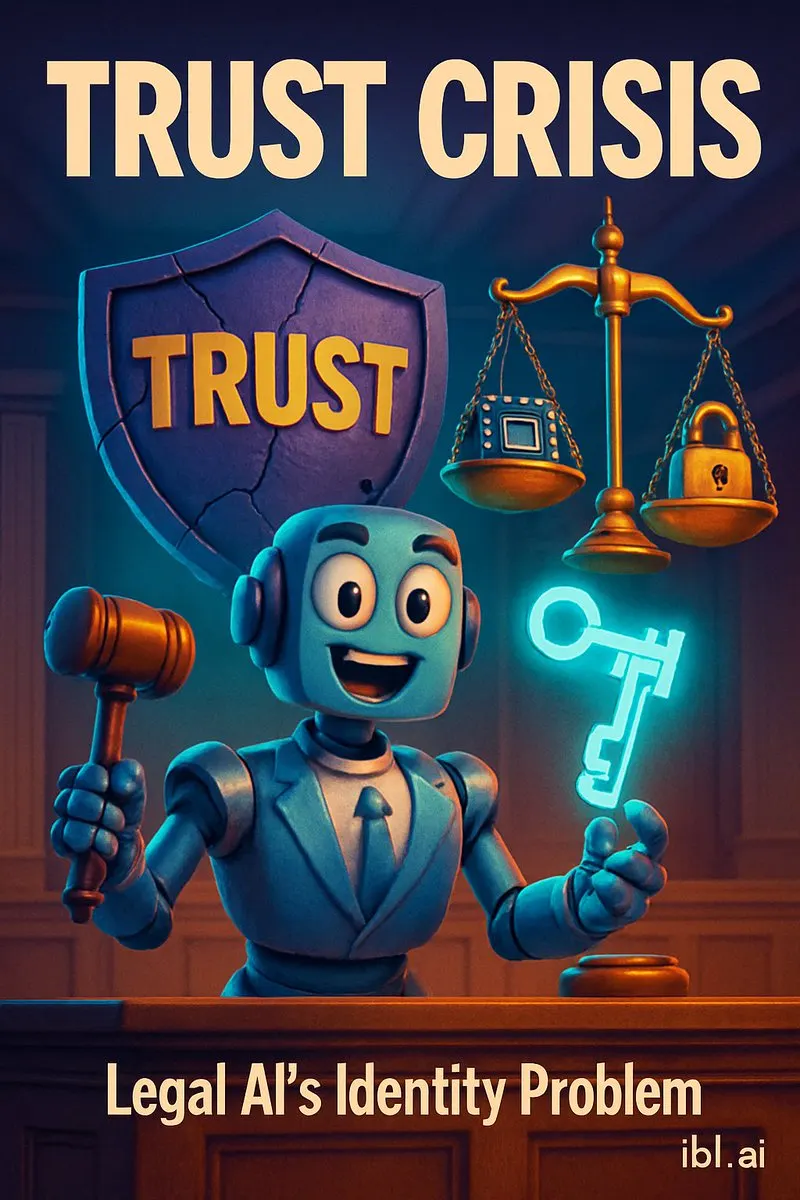
Legal AI's Next Crisis Is Trust, Not Intelligence
Legal AI agents are drafting motions using static API keys tied to shared service accounts, with no verified identity and no per-action audit trail. The LexisNexis breach confirmed in March 2026 showed what one over-privileged machine identity costs — and the profession's own attribution standards were never written for a caller that is not a person.
Who Should Build Your AI Platform in 2026?
Accenture booked $11.5B in advanced-AI work; OpenAI capitalized a deployment company above $4B; Anthropic's services JV is reported above $1.5B. Three kinds of partner, and what each one structurally cannot give you.
UK Sovereign AI: Real Procurement, But the IP Still Leaves
The UK's £500m Sovereign AI Unit is the most concrete sovereign-AI programme any major government has run — and its own contract terms let suppliers keep all the IP while government retains usage rights only. Meanwhile £1.41bn of 2026 UK public-sector AI procurement still flows mostly to Microsoft and Palantir.
About Agentic AI Blog
Insights on agentic AI, from agent architectures and LLM infrastructure to enterprise deployment and developer tooling. Our team shares practical guides on building AI agents, optimizing model pipelines, and scaling AI systems in production.
Written for CTOs, developers, AI engineers, and technical leaders who are building or deploying agentic AI. Each article includes actionable takeaways grounded in real-world implementation.
Our editorial team publishes new content weekly, drawing on deployment data from 400+ organizations and 1.6M+ users. Every piece is reviewed by practitioners with hands-on experience building AI platforms.