AI Agents
Building, deploying, and managing autonomous AI agents for workflow automation, customer support, internal operations, and more.
AI agents represent the next evolution in enterprise automation—intelligent systems that can reason, plan, and take action autonomously. Unlike simple chatbots, AI agents handle complex multi-step tasks across customer support, internal operations, data analysis, and specialized workflows. Discover how agentic AI is transforming how organizations operate.
624 articles in this category

Why Only 15% of Banking AI Use Cases Reach Production
Adobe and Incisiv surveyed 528 financial services executives and found only 15 of every 100 proposed AI use cases reach production. The 85% stall on architecture, not models — and the three gaps that stop them are the same three every time.
Worse Than Hallucination: Confidently Wrong
A hallucination is a wrong answer you can catch. Metacognitive failure is a wrong answer delivered with full confidence and no internal signal that anything went wrong — which is the failure mode that actually matters once an agent is allowed to act rather than answer.
Agent Governance Moved Into Infrastructure
At VMware Explore on August 31, Broadcom shipped agent governance as infrastructure: AgentMinder authorizes every tool call against an agent's declared mission, and vDefend discovers agents by watching traffic. The thesis is right. The question is whose infrastructure it runs on.
A $399 Robot Duck Signals Physical AI's Shift
Hugging Face and Pollen Robotics launched Microduck, a $399 open-source 25cm biped with camera, LiDAR and an Apache 2.0 RL stack. The price is the point: the pattern that made frontier language models commodity is now reaching hardware.
ChatGPT for Teens Shipped. Who Governs It?
OpenAI began a global rollout of ChatGPT for Teens on August 18, 2026, auto-enrolling under-18s using age prediction. The product decisions are reasonable. The governance question is who sets them — a vendor in San Francisco, or the district accountable for the students.
Ally Built Six AI Customers Before Shipping
Ally's Personas project built six AI agent personas modeled on its 11M+ customers, so teams can gather user feedback instantly instead of waiting on a research cycle. The interesting part is the inversion: most enterprises deploy AI to serve customers, not to understand them first.
The Model Is Commodity. Retrieval Is Not.
Prompt engineering is becoming table stakes. The scarce skill in 2026 is retrieval and context engineering: deciding what an agent sees, from which source, at what point in the task. In financial services the model is the same for everyone, so the knowledge layer is the differentiator.
Legal Grew 108x. Governance Didn't Move.
OpenAI data shows weekly legal users of Codex grew 108x between February and June 2026, against 5x for engineering. The multiples are indexed from a low base, but the direction is clear and the governance layer underneath has not moved at the same speed.
Three Dependencies Agencies Can't Accept
A vendor-managed AI assistant creates three simultaneous dependencies for a government agency: data, model, and jurisdiction. Each one is a control an agency is normally required to hold, and none of them is fixed by a contract clause.
Sovereign AI: 67 Countries In, Firms Stalled
The CNAS Sovereign AI Index counts 184 government-backed projects across 67 countries in the first half of 2026, most of them infrastructure. Enterprises say 99% are deploying agents and roughly 9-14% have. Governments are building the layer enterprises keep renting.
Nvidia + Hugging Face Is a Lock-In Question
Nvidia has reportedly agreed to buy Hugging Face for $12.9B. Nothing is signed and both companies declined comment, but the strategic question is already live: open weights protect you from a model vendor, not from whoever owns the distribution layer.
Agent Sprawl Is a Board Issue. Most Cannot Count Theirs.
96% of enterprises run AI agents and only 12% have a centralized way to manage them. SAP, Gartner, AWS and OutSystems all published the same gap this year: deployment outran inventory. The fix is an owned control plane, and the registry has to sit inside your perimeter.
Prior Auth Is Not a Question. Why Clinical AI Needs Pipelines.
Prior authorization, medical coding, and care coordination are multi-step processes with approval gates and failure branches — not single questions. Chat cannot express them, which is why hospital AI pilots that demo well stall at production, and why the unit of deployment has to be a governed pipeline.
The Chat Window Breaks at Five Agents. CanvasTTY Shows What's Next.
CanvasTTY arranges live terminals and AI-agent CLI sessions on an infinite canvas instead of in tabs, and zooms out to readable summaries rather than tiny noise. It is a developer tool, but it demonstrates the interface problem every organization running concurrent agents is about to hit: a linear transcript cannot show you five things at once.
99% Plan to Deploy AI Agents. 9% Have. The Gap Is Not the AI.
A August 2026 survey found 99% of companies plan to put AI agents into production and only 9-14% have fully done so. The blocker is rarely model capability — it is that an agent needs a machine-readable account of how work actually happens, and most organizations have never written one down.
Healthcare AI Should Start in the Billing Office, Not the Exam Room
Roughly 65% of denied healthcare claims are never appealed, while 54% of the ones that are get overturned. That gap is the highest-ROI AI deployment in healthcare, and it sits in the revenue cycle rather than at the point of care — but only if the PHI architecture survives a security review.
What the UK-Ukraine AI Declaration Actually Says About Sovereignty
The UK and Ukraine signed an AI partnership on 24 August 2026. It is a non-binding declaration about sharing battlefield data, not a sovereignty mandate — and reading it accurately matters more for government AI buyers than the headline does. What the document commits to, what it does not, and what India's DRONA 2.0 shows about sovereignty that is already operational.
Alibaba's ANOLISA Moves Agent Infrastructure Into the Operating System
Alibaba Cloud open-sourced ANOLISA, an agent-first Linux distribution that treats context compression, sandboxing and agent observability as operating-system services rather than application features. Here is what it actually ships, what the OS layer can and cannot own, and why the pattern favors organizations that own their stack.
The Agent-First Campus: Why Universities Are Buying an AI Operating System, Not Chatbots
Universities that moved past chatbots are not deploying a better chatbot — they are deploying a network of purpose-built agents wired into the SIS, LMS and CRM. The decision that determines whether it lasts is not which agents you build but whether you own the platform underneath them.
OpenViking's Real Number Isn't 91%. It's AGPL-3.0.
ByteDance's OpenViking cuts agent token use by 34–91% and is at 32,900 GitHub stars. It is also AGPL-3.0, which is the fact enterprise architects need first — and the one every summary of the release leaves out.
Agent Skill Catalogs Are a Supply Chain. Who Signs Yours?
Enterprise teams have stopped asking how to deploy an agent and started asking who is allowed to publish a skill. NVIDIA's verified skill pipeline treats agent capabilities as signed software artifacts — which makes the catalog a supply chain, and raises the question of who holds the signing key.
The Agent Runtime Just Commoditized. Now What?
DeepSeek Harness has passed 191,000 GitHub stars under MIT, Microsoft's Agent Harness reached GA, TrueForge is MIT, and Block open-sourced its Berd agent workspace under Apache 2.0. The agent loop is free — so value moves to what you build on it, where you run it, and who governs what plugs into it.
The $7.2M Abandoned AI Initiative: What Goes Wrong
The average abandoned enterprise AI initiative has $7.2M sunk into it, and 88% of pilots never reach production at all. The failure is rarely the model — it's the eighteen months spent building a foundation.
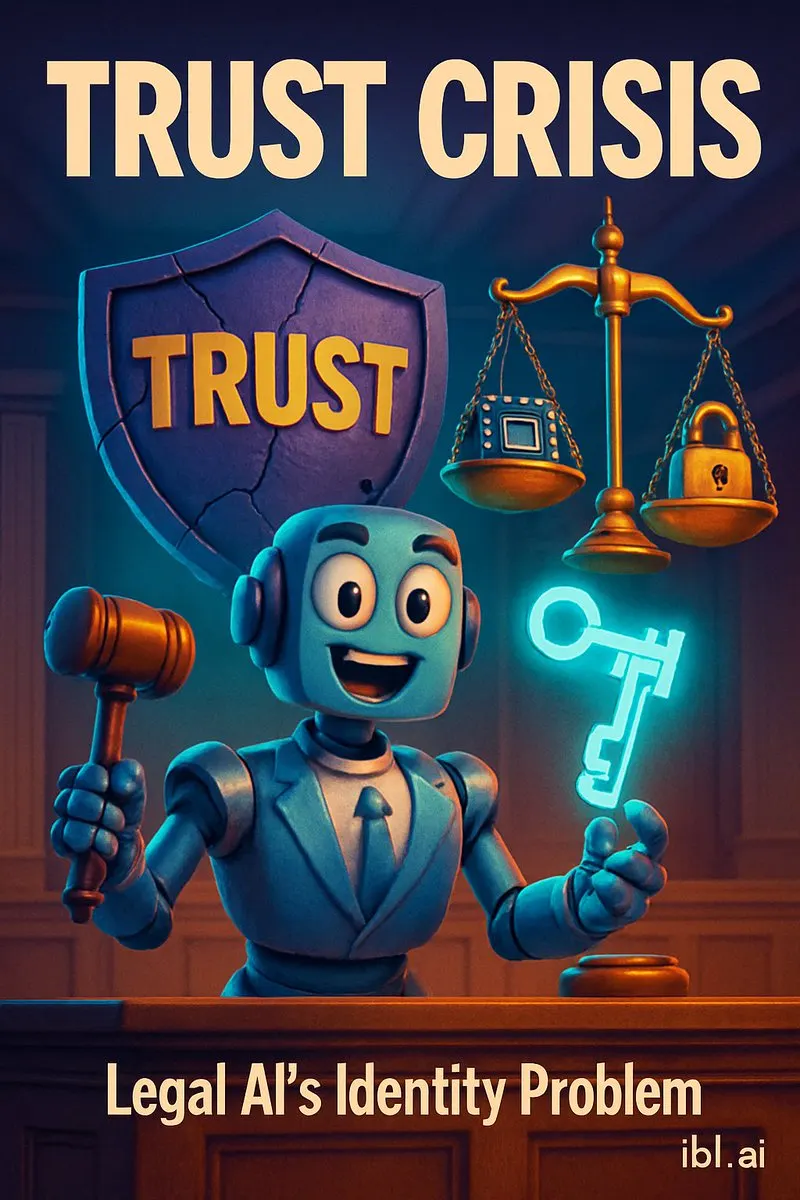
Legal AI's Next Crisis Is Trust, Not Intelligence
Legal AI agents are drafting motions using static API keys tied to shared service accounts, with no verified identity and no per-action audit trail. The LexisNexis breach confirmed in March 2026 showed what one over-privileged machine identity costs — and the profession's own attribution standards were never written for a caller that is not a person.