Apps built on ibl.ai can now sell access on the organization's own Stripe account: the admin chooses free, one-time or monthly, clicks Connect with Stripe, and members pay in Stripe's embedded checkout — with no commission, no webhooks and no platform key inside the app.
On ibl.ai you own all the code and the data, and here that includes the customer relationship and the revenue.
The pay-to-enter rail first shipped on August 20.
September added ready-made paywall components (September 2), Connect with Stripe and in-app embedded checkout (September 22), and the full in-app setup and member checkout in the /iblai-vibe-monetization-app-paywall skill (September 23).
The open reference app, vibe-agent, walks the whole flow in fifteen screens.
How do you charge for access to an AI agent on ibl.ai?
The organization's admin answers one question inside the app, at /paywall/setup, and the answer can change at any time.
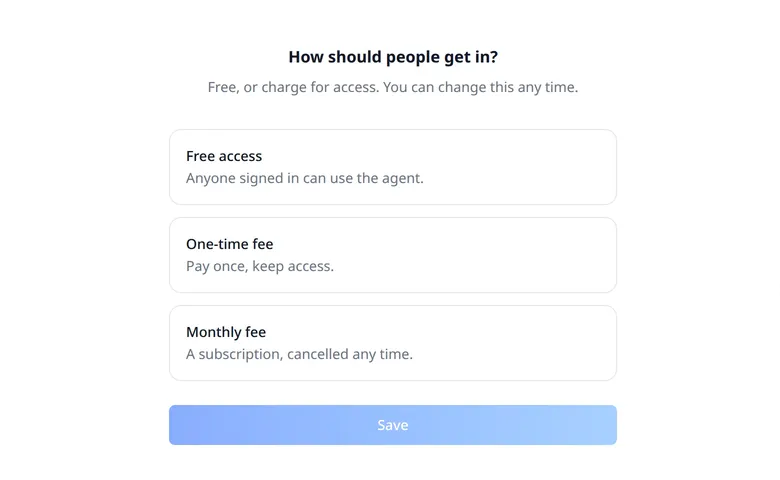
Free access lets anyone who signs in use the agent. A one-time fee is paid once and keeps access. A monthly fee is a subscription; cancelled from the Stripe dashboard, access lapses within about two minutes. Prices are set in US dollars.
For a paid choice, the next screen has one button. The admin signs in on Stripe's own site and picks the account, and the product and price are created on it automatically. The app never asks for a Stripe key, and the coding agent that built it never touches Stripe at all.
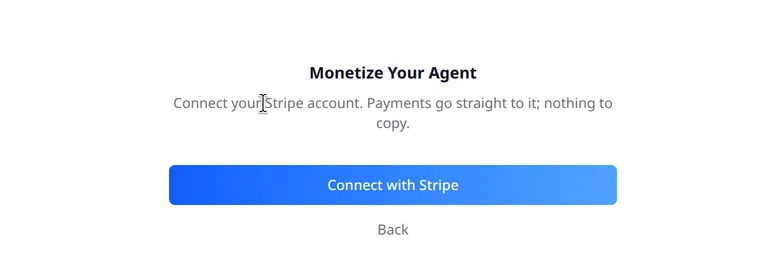
Connect with Stripe links a standard Stripe account, and the platform stores only the account's identifier. Organizations that prefer can paste a restricted Stripe key instead.
What does a paying member see?
A member signs in with SSO. When payment is due, they see Pay to continue and Stripe's own embedded checkout in a modal — card, Link, currency choice and all — then land back in the app.
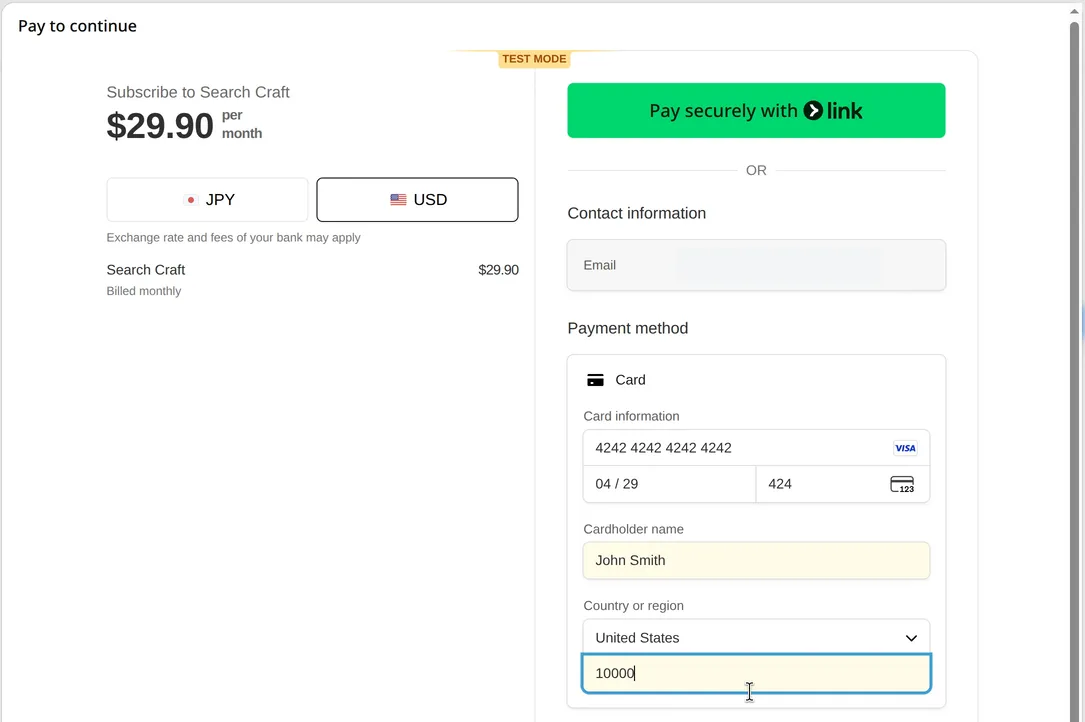
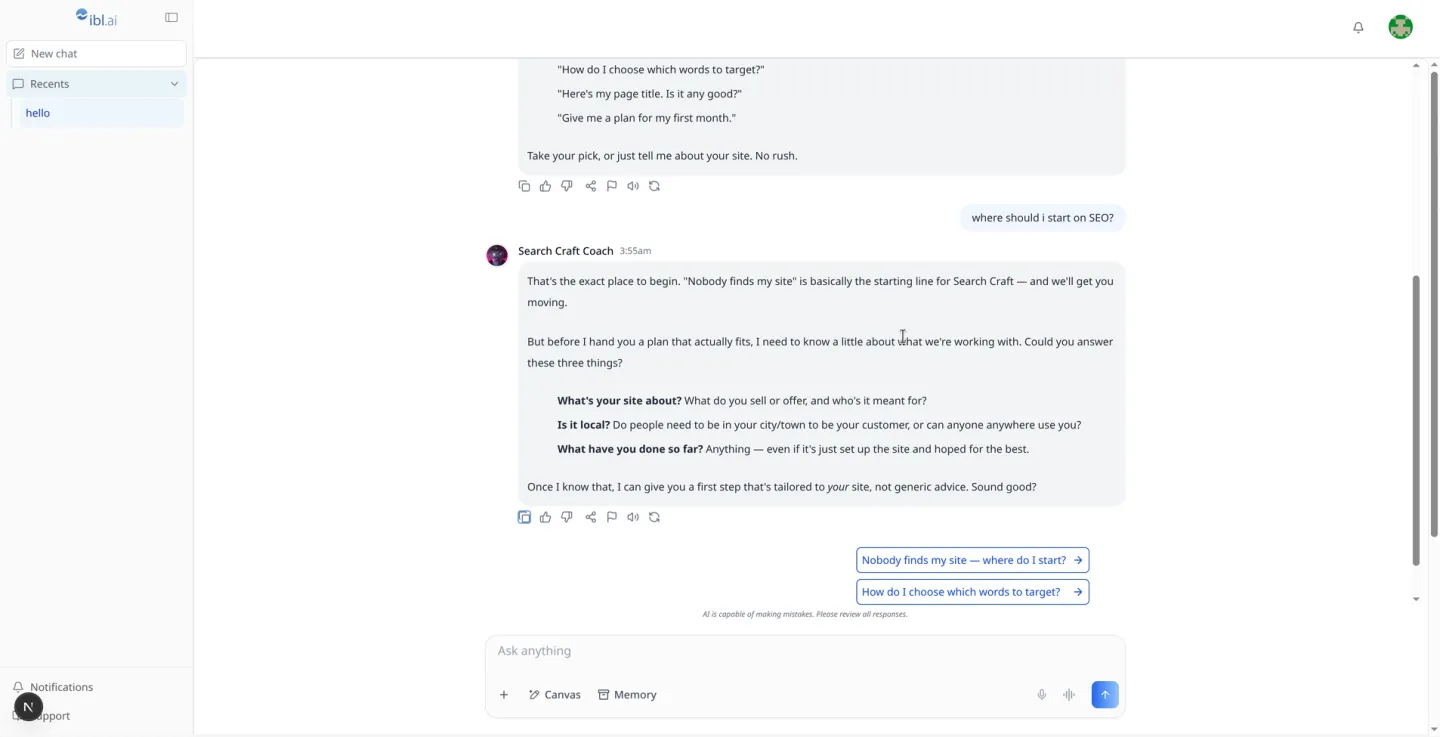
The example above is the vibe-agent tutorial in Stripe's test mode, selling a $29.90-a-month subscription to an SEO coaching agent, paid with Stripe's public test card. The customer's email is redacted. Once paid, the member is straight back in the chat.
Does ibl.ai take a commission on app payments?
Not on this rail. There are two ways to charge on ibl.ai, and they suit different sellers.
| App paywall (this release) | In-platform checkout | |
|---|---|---|
| Sells | Entry to the whole app | Individual items — agents, courses |
| Stripe account | The organization's own | Stripe Connect Express, managed by ibl.ai |
| Commission | None | An ibl.ai commission on each sale |
| Reconciliation | Platform records and live checks — no webhooks | Webhook-reconciled subscriptions |
How does the ibl.ai platform keep payments reliable without webhooks?
The platform owns entitlement end to end, so the app holds no payment logic of its own. It creates every Stripe Checkout Session, verifies the buyer's session as soon as they return, records each payment durably, and checks subscriptions live.
Answers are cached briefly — a grant for 60 seconds, a denial for 15 — and a fresh payment punches straight through a cached denial, so a member who has just paid is never turned away. Recorded payers stay in during a Stripe outage.
The app itself carries no cookies, no webhooks, no local payment ledger and no platform key. Members pay on their own signed-in session, and the two admin routes forward the admin's own token.
How do you add a paywall to an app you already built?
With one skill. In a coding agent that has the Agentic Vibe toolkit installed, /iblai-vibe-monetization-app-paywall adds the setup page, the gate, the payment page and the two admin routes to an existing app.
The vibe-agent repository is the finished example, with the tutorial alongside it.
For costs on the other side of the ledger — what the organization spends on models — see spend limits.
Want to launch a paid AI product on your own brand?
We help organizations package their expertise as agents people pay for. Book a 30-minute demo or talk to the ibl.ai team — ibl.ai is family-owned and operated from New York, NY.